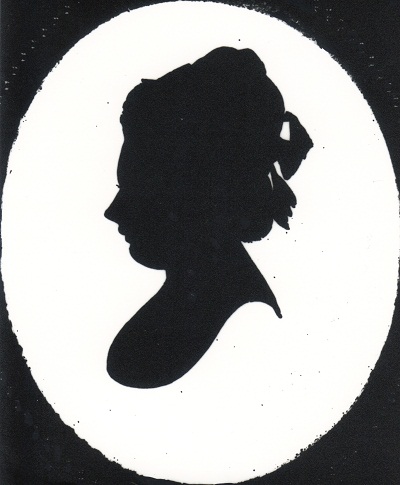
- Born 'Mary Done' on 12 March 1752, daughter of John Done (b.1720) and Ellen Bradbury (b.1721).
- Often known as 'Molly' by friends.
- Wrote poetry and was unsuccessfully wooed by William Roscoe (1753-1831), as detailed in her correspondence.
- First wife of John Barton the Elder (1754-1789).
- Mother of Maria Hack (1777-1844) and Bernard Barton the Quaker poet (1784-1849).
- Died 1 March 1784, aged 31.
Children
With John Barton the Elder (1754-1789):
- Mary Barton a.k.a. Maria Hack (1777-1844).
- Elizabeth Barton (1779-1838).
- John Barton (1782-1784).
- Bernard Barton the Quaker poet (1784-1849).
Death
"I hope my dear friend will not impute it to any want of respect or regard for him, that I have been thus long in acknowledging his very kind and much esteemed letter of the 29th Ulto; but will rather attribute my silence to the very afflicting & distressing situation in which I have been ever since that time. The very day on which my friend wrote to me, was the last which my late dear and excellent Wife was ever permitted to see. She was taken from me the next morning a little after three O'clock; when I was for ever deprived of the most inestimable blessing w‘ch this world ever did, or ever can afford me, and left to mourn a loss, the greatness of which I become every [day?]more and more sensible of. But, my dear friend, tho' this has been the greatest, it is not the only affliction with which I have been visited. My eldest little Boy, now near a year and a half old, is also taken from me. He has been ill about six weeks in the Hooping Cough, which last has proved fatal to him. He died this morning [18 March 1784] about ten O'clock. He was a sweet little child and but a few weeks ago in the full bloom of health, with every appearance of a long continuance of it; and I had fondly entertained the most flattering expectations concerning him. But alas! how little do we know what a day may bring forth; and how justly are we exhorted, in this mixed and uncertain state of things, to rejoice, (even when our prospects are the most engaging as tho’ we rejoiced not!" From a letter by John Barton to William Roscoe, dated March 1784.
Biography (by Malcolm D. Barton)
Chapter 1: Romance
‘And catch each lovelier transcript of her face’
[Roscoe’s Elegy VI]
I have to dismiss the romantic idea that Maria Done met William Roscoe in 1766 in the bookshop of John Gore publisher of the first Liverpool Street Directory! Their common interest in poetry, in words, and in the countryside, would soon have been apparent, but William only worked for one month there and he was only thirteen, and Maria one year older!
Maria was born on March 12th 1752, and came from Norley on the edge of the Delamere Forest a place associated with the Done family over many centuries. Her father John was born in 1719 but he had never known his father as he had died in 1720 at the age of forty. Her mother was born Ellen Bradbury in 1721 and married John a fellow Quaker in 1744. There were three daughters, Martha born in 1747, Sarah born in 1749 and Maria herself in 1752. However the three girls were to find themselves without parents before they were grown up.
John Done who was described as a yeoman died in 1761, and Ellen probably in order to support her young family married again three years later in 1764. Her new husband Daniel Seddon was another Quaker but then Ellen herself died two years later in 1766. Maria would have been fourteen.
[Maria’s only mentions her father once in her letters, “my father dying before I was capable of receiving his instruction” and in the same letter her mother “my Dear & Pious Mother”; Letter to Jenny Lightfoot February 21st 1772.]
Two years later Martha her eldest sister now aged nineteen met Samuel Heald a neighbouring Quaker at Newton and married him in June 1768. What is significant to Maria’s story is that he was working in Liverpool as a saddler. Maria certainly had met William Roscoe in Liverpool by 1769. She could have been staying with Martha her married sister but one source says that she and Roscoe met when she was staying with friends. Jenny and Betty Griffies daughters of a linen draper lived in Castle Street and Maria certainly stayed with Jenny Lightfoot a cousin of the Scotts a Liverpool merchant.
William Roscoe also came from a relatively humble background. His father was an innkeeper and a market gardener at Mount Pleasant then on the edge of Liverpool. William left school at twelve, and he worked in his father’s market garden, (potatoes being a particularly profitable crop,) but his mother continued to encourage him in his writing.
From an early age he was keeping his favourite poems in a book, to which he added his own.
The early poems that the young boy was writing himself show the classical style and influence of poets such as Shenstone and Pope, as well as Gray, and this one was written for Maria.
Light curl’d the fluttering Gales along
The Redbreast clos’d his Evening Song;
Unhear’d distill’d the pearly Dew,
Faint on the sight the landscape grew.
Through the Blue sky pale Cynthia roll’d
And ring’d the neighb’ring Hills with Gold.
Clos’d were the flowers along the Green.
And mild and peaceful was the Scene:
When far from Noise and Care
Slow wandering o’er the pathless Lawn,
A youth pursued his lengthening Way,
Regardless of the sinking Day:
[Extract from ‘To Maria Done.’ ROS 1260]
After three more years working out of doors for his father, he was articled for six years with John Eyes, Jnr. a solicitor in Church Street. [George Chandler ‘William Roscoe of Liverpool’ 1953 p.11. B.T.Batsford Ltd.]
Here he was also encouraged by friends including a young schoolmaster Francis Holden to widen his knowledge and experience. Holden taught him mathematics, Latin, French and Italian. Roscoe together with fellow students William Clarke and Richard Lowndes would meet up early in the mornings before work to study. Roscoe’s correspondence includes not only his interest in books but also in girls! The young Holden declared that seventeen was the sweetest age for a woman. [Chandler p.21]
It is even possible that Roscoe met Maria at the solicitors for they did much work for Liverpool merchants such as the Scotts.
The only mention Maria makes of her education was her failure to learn shorthand from her teacher a Mr. James! [Letter to Betty Griffies September 26th 1773 R.C. 1258]. Her spelling was not a strong point either, being both inconsistent and ‘creative’.
Samuel Heald died the following year. The cause of his death is not known but consumption and smallpox were the most common fatal diseases in Liverpool at that time. The young widow, now Martha Heald, married two years later on June 20th 1771 Thomas Bewley a Quaker merchant living near Carlisle at Rockcliffe.
There were times when Maria returned to the family base at Norley in Cheshire where they has all been born and where her stepfather may have continued to live, but Maria’s earliest surviving letter dated 15th November 1771, records a long ride on horseback from Liverpool to Rockcliffe, where she stayed for some weeks with the newly married Mr. and Mrs. Bewley. [The book on ‘The Bewleys of Cumberland’ published in 1904 includes extensive family trees both in Cumberland and Ireland. Senior branches of the family lived in notable houses but our Thomas was probably of the statesman/yeoman class from a junior branch and the most likely Thomas was one born in 1736 for whom a ‘Castle Sowerby’ reference was given. There is no reference in the published family tree to either his marriage or any children, but his great grandfather was a close friend of George Fox founder of the Quakers who spent some years imprisoned in Carlisle gaol]. This seems to be the first time she had travelled to Rockcliffe for she describes her four day journey to her friend Jenny Lightfoot. Although she was riding with a servant Isaac, they missed their way after leaving Kendal taking the wrong turnpike road. They had left early enough to have reached Boroughbridge for breakfast, and rode on to Rockcliffe arriving very tired a little after nine in the evening but a day earlier than expected. [Letter to Jenny Lightfoot November 15th 1771. This letter was addressed to Jenny Lightfoot at Calder Abbey, which would have been the substantial house built from part of the ruins of the abbey]
Rockcliffe proved to be popular with Maria. By June 1772 she was writing to a friend:-
‘this place is become so verry verry pleasing to me that I can scarsely tell how to quit it, & can even think of Norley without a sigh, this sweet air agrees with me extremely well, & seems to have become almost Natural to me, …’ [Letter to Betty Griffies June 26th 1772. R.C. 1255]
Jenny Lightfoot had asked Maria to send her a poem and Maria sends her a few lines in praise of Jenny’s cousin Scott ‘that amiable woman,’ as a form of 'Thank you.’
‘Pardon the incorrectness of these lines, my Dear Jenny & remember they are only fitt for the Eye of a verry partial Friend...’
How oft in Silent sweet attention wrapt.
Have I with trancport, heard her tongue unfold.
With gracefull energy, the native Charms
Of heavenly Vertue, soft as morning Dews
On earth descends the pleasing Accents fell.
Whilst Radient Truth rose like a nother sun.
& beam’d refulgent clear from passions mist
with Strongest influence on th’ enlighten’d Mind.
William and Maria exchanged letters and poems regularly and William’s first major poem ‘Mount Pleasant’ written at the age of sixteen was dedicated to Maria. In turn Maria had a great deal of admiration for William, but it seems that at no time did she have marriage in mind. This was to prove most unfortunate for Roscoe as he had been writing passionate poems long before Maria left Norley.
What Various Beauties
What various beauties Norley’s shades adorn
What time bright dew drops hang on every thorn
What wide extended Prospects glad the scene
Spring painted vales and lawns for ever green
Where rolls the gurgling stream its’ little tide
Where springs the daisy on its’ genial side
Where swells the mounting lark its’ twitt’ring throat
Wild fancy varying every pleasing note.
Where each enchanting beauty seems combin’d
“To raise to soothe to harmonise the mind.”
But ah! what numbers slight the blissful plain
And fly to scenes where care and tumult reign
Or lost to all the pleasures those supply
Range o’er the waste of blooms with heedless eye
But thou Maria! In whose spotless heart
Each ripening virtue claims her mingl’d part
Whose nobler mind can taste the Joys they yield
May’st range enraptur’d o’er each flow’d deck’d field …
[Extract. Chandler p 318. Much of Roscoe’s poetry was old-fashioned even in its time. Years were to pass before he wrote his best known poem, “The Butterfly’s Ball and the Grasshopper’s Feast” which was the first poem written for children which did not attempt to include moral instruction. It was popular with King George III, and is still heard today set to music today.]
Maria’s friends had high opinions of her too. Jenny Griffies writing to her sister Betty recorded:-
‘I think were I to live constant with Miss Done I shou’d learn Humility ( you will say a Qualification I stands very much in need of) : when I first view her, then take a inward view of myself, I sink into nothing. That I could ever arrive at half the good sense she is Mistress of –’
[Letter from Jenny to Betty Griffies dated April 30th 1772. R.C.2765. Jenny was quite a spirited lady and records a delightful moment riding home in a one horse carriage from Carlisle to Rockcliffe, “in a one-horse carriage, a very snug one, that just held Miss Sally, Miss Molly, & me. A gentleman passed a pretty Compt on us ‘that we were the best zoo. – he had seen in the whole country’, so guess the name of our carriage.”]
And in a letter written a few weeks later:-
‘I had ever the tenderest regard for our dear Miss Molly, but ‘tis by this visit much heightened. In her, my Betty, have we the happiness of finding the sincere friend, the agreeable companion, and the accomplish’d woman whose conversation ever conveys both instruction and pleasure’ –
[Letter from Jenny to Betty Griffies dated June 27th 1772. R.C. 2766]
Was Maria entirely without fault? Many of Maria’s letters to her friends do apologise at some length for not having been written earlier. One example that reflects on her Quaker life is that written to Jenny Lightfoot written in early 1772.
Yes, my Dear Jenny, I own I have been too blame, that I am an idle correspondent, & scarsely deserving of the kind rememberances Thou has bestow’d on me in my Sister’s letters. I accknowlidge at once thy goodness & my own unworthyness of it, yet let me not be more severe, then Just neither. The beginning of this letter is so much like one of those Papers that sometimes make their appearance at our prepositive Meetings,that I cannot for bear smileing. The resembleance is indeed verry strikeing, & how shou’d it be otherwise? Their nature, & cause is the same, both intended as humble accknowlidgments of past faillings, & containing sinceare assurances (as far at least as we are able) of amendment for the future.
The two Griffies sisters also admired Maria’s poetic skills; indeed Jenny copied out for Betty’s interest, Maria’s “Soliloquy to Sensibility”
Dear Sensibility, tis thou and thou alone
And thy soft influence in the human breast
That opens every avenue to bliss.
And ev’n to Grief thou gives a pleasing charm
The tear that falls for others woe – exalts
The feeling soul, and lifts it up to Heaven!
Tis here we trace thee – fountain of delight.
And see and feel the origin divine.
Did not some generous joys, & generous Cares
Beyond ourselves, for other weal or Woe
Call forth soft Pity, & awake to Life
The beauteous blossoms of humanity;
What were we? Beings without a name.
Savage, revengeful, cruel, and Untam’d. –
To Thee thou great Sensorium of the World,
Thou heavenly particle of love divine,
We owe the noblest feelings of the mind
Friendship & Love. Two beauteous Sister-twins
Recieve from thee , their most engaging charms.
Tis thy soft power within Eugenious breast
That heaves the Sigh sincere, when secret grief
Disturbs my Soul; or when the tedious hand
Of lingering Sickness has oppress’d me long
He draws my curtain, hears my piteous tale
Of pains & sorrow: then with softest art
And gentlest skin, pours in the healing balm
Of kind concern & Consolation dear.
Some twenty years later Jane Austen was to give her own definition of ‘Sensibility’ and ‘Sense.’ In that century it was a popular cause. Today we are more familiar with the expression ‘heart and mind’. Roscoe was often inspired to write about Maria, but sometimes with a note of frustration which burst through the stilted conventions of the time.
‘Yet vain be all his power to move
Maria’s stubborn Soul to Love?’
Regardless of my constant flame,
She flies at Love’s suspected name --
‘Twas first her Mien my Heart allur’d
Her spotless Soul the Charm secur’d
To gain her Friendship next I strove
And that, deceitful, led to Love:
Blest was the Hour, when free from Care,
I breathed with her the Evening Air;
Mark’d every soft Emotion rise,
And trac’d the Language of the Eyes,
Enraptur’d prest her Hand, and hung
On every Accent of her Tongue;
[Extracts from ‘To Maria Done’. Chandler p.178 (ROS 1260) Written in 1769?]
Roscoe, in his disappointment felt moved to write several Elegies, some of which were written with Maria in mind. Elegy IV illustrates Roscoe’s care for Nature which was unusual for its time.
Around my Cot the feathered train shall throng
Nor timorous from my hasty step retreat,
The Martin’s nests shall spread the roof along
The rafters be the red breasts favourite seat
For not to spread destructions wasteful reign
Shall there the fowler take his deadly aim
Nor shall the ruthless Hunter sweep the plain
Nor shall the Angler fright the peaceful stream
Then would Maria share my calm retreat
Each charm from her would catch a tenfold grace
The sportive Loves should haunt our favor’d seat
And every hour and every path be peace.
[Extracts from Elegy V. Chandler p.204.]
One letter from William Roscoe to Maria survives. It is addressed to ‘Mr Bewleys Rowcliffe’ ‘to be left at the Bush in Carlisle’, and dated June 5th 1772 some months after Maria asked for the correspondence to cease. It is very difficult not to sympathise with Roscoe.
You tell me, my lovely friend, that “If I would assure you my silence on a particular subject occasioned me no pain, you would be satisfied” – but this is rather too much. Bodily pain must be born and often is with resignation, but to declare in the midst of it that we are at rest, seems rather too hard a task. It is the same in the mind, and we still find relief in bewailing our miseries which are always redoubled by being obliged to disown them. Do not then pursue your triumph too far, do not tempt my sincerity too often. To add to the happiness of Maria, is the sole of my ambition, the purpose of my life, but at present I can only lament my inability of doing it.
I dare not enter into an argument in the event of which I am so nearly concerned (but) it would however be shameful in me to relinquish my assertion at the first word. I have therefore employed a councellor on my side who I know is a favorite of yours; this is Mr Thompson, who in many places in his seasons supports what I have advanced. I am confident too Maria has read a little ode of his which ends,
“True Love and Friendship are the same.”
[James Thompson (1700-1748) a Scottish poet published his long poem ‘The Seasons’ in 1730. The words not only inspired John Clare to take up writing poetry but also Joseph Haydn to write his oratorio.]
If the opinion of an author so skilled in the human heart as Thompson was, cannot succeed, how needless it will be for me to attempt it – though if my memory was not rather defective I would bring authorities from other writers.
[John Wilkes supported liberal causes that Roscoe would have approved of such as the freedom of newspapers to report parliamentary debates. Wilkes was imprisoned for his political opinions for two years but by 1772 was a London magistrate, and in 1774 he was to be elected as M.P. for Middlesex.]
Your venerable admirer is indeed a laughable character. The short list of his writings mark him for an oddity – “A letter to Mr Wilkes in the Kings Bench, another to a Friend in Town, and a third addressed to a Lady!” We can conclude no less, but that he perfectly understands Politics, Morality and Love.
When Maria only advances a maxim as one that may be controverted, I sometimes venture to dissent from her opinion, but when she asserts it, it is with me sacred and undeniable. For this reason if she thinks proper I will acknowledge that Rowcliffe is nearer London than Liverpool is – that the poems of Miss Pris. Poynton are superior to Milton, or even that the lines quoted by you in your last letter are superior to Collins picture of Mercy.
[William Collins, an early romantic poet, was educated at Winchester College.]
Flattery! my Maria. Yes, you might justly be afraid of being accused of Flattery – to set Collins and me in the same page is the greatest absurdity I ever knew you guilty of – but though I am sensible of my own inferiority, it affords me the greatest pleasure to know that I bear so high a place in the opinion of Maria – to merit is more than equal to the applause of all the rest of the world. It is you, my Maria, who continue to support me in my ancient occupation of scribbling….
Maria and myself however are almost the only persons to whom my labours are known, and I am certain the only ones who find pleasure in them. –
Yet to convince you that I am better than my word (which was to send you a piece on condition you sent me one) I shall copy a few lines I wrote one day when every thought was employed on its usual subject and it was impossible to avert them to choose any other to write on. I have addressed these lines to a Gentleman and Lady who live near Rowcliffe and must beg Maria if she chances to see them in a dusky evening gliding through the thickets, to present my compliments – and from her hand they can hardly refuse to comply with my request – but should you not happen to see them soon, I think the best method would be to make two copies, one to be placed on the highest tree in Rowcliffe and the other thrown into the river.
Majestic Genius of the shades
Where oft Orinda’s steps are seen
Thou who protect’st the freshening glades
And spreadst with Brighter flowers the Green!
And Thou the nymph of Edens tide
Who leading slow the mazy train
Pours’t Health and Joy on every side!
O hear the verse, nor hear in vain.
And when to meet the lingering day
Along your lawns Orinda treads
Then all your lovliest tints display
And bid sweet music chear the shades.
Let Azure hues the skies adorn
Let every flower it’s sweets exhale
All nature feel the favorite morn
And Health descend in every gale.
Or when to shun the sultry sky
She seeks at noon the cool retreat
Then let your Branches press more nigh
To screen her from the noontide heat.
[Rowcliffe is on the River Eden. Poem extracted from the eight verses written.]
You see my lovely Friend I have no left all manner of diffidence: I no sooner scrawl over a few verses but you have them however bad without any excuse. However at length I begin to tire of Poetry – we have such numbers in Liverpool to pursue the track, that bad as I am I must own I am rather ashamed to walk with them; beside , as the mind matures it quits the unsubstantial delights of the fancy to grasp at something more solid….
Follow a good example and write again soon, once more I must bid my Maria Farewell,
W.Roscoe
[Extracts from ROS 920/6010.]
The dating of this letter from William Roscoe is very interesting. Maria, now nineteen years old struggled with herself to explain why she intended to withdraw from her close friendship with Roscoe. She had written some five months earlier in February 1772 to Jenny Lightfoot who was staying at Mr Scott’s Merchant at Liverpool.
‘Thou will perhaps be surpris’d when I inform thee that I have found it necessary, for several reasons, to drop my Correspondence with Roscoe. I Gave him a hint of it in a former letter, & to the last in which I plainly told him my intention, I have rec’d, yet, no answer, this resolution was in part, oweing to some inteligence I have re’d from Peggy Marriot, -- I found by her letter that many at Liverpoole had Constru’d the Attentions of a Friend into the assiduities of a Lover, I was I own, & still am unwilling to give up so pleasing & at the same time so instructive a Corrispondent . – but in some Case’s we are not at liberty to Consult the grattification of our own private inclination, & yet I am unwilling to think, that we ought to make our peace of mind entirely dependant on the opinions of others, esspecially when those opinions are not founded on truth, nor are the result of a right information, many will Condemn, many will censure the actions of another, when they are utterly unaccquainted with the motive that influenc’d them, how unjust, & at the same time how ungenerous a proseeding, yet from what I have said I wou’d not have my Dear Jenny to imagine that I think we ought to pay no regard to appearances or to the Judgement of the many who think they have a right to interfere, both ought Certainly to have some weight but I wou’d wish their power were confin’d within proper limits.’
[Extract from letter posted at Carlisle and dated February 21 1772.]
Four months later Maria is still concerned about her relationship with Roscoe. In another letter to Jenny Lightfoot she writes:
Thou tells me, my Dear Friend, that Mr Roscoe “will be a delighted Man.”
Indeed I question it, our stay in Liverpool will be verry short, & during that short time it will I am persuaded be necessary for me to behave with that reserve which will not be pleasing to him, or agreeable to myself. I have been, & am no little perplex’d with this affair. – I do not mean that I am at a loss how to act, but I feel a real concern at being under the necessity of giving pain to a worthy heart, - but it is Unavoidable. – We still Correspond, tho’ I have inform’d him more than once, that it is my intention to drop it, as the likeliest method of bannishing every unpleasing reflection, but he pleads so earnestly to be at least, still Consider’d a friend, & promises to give up the most distant thought of every other pretention, that I know not how to persevere in my resolution...
I have suffer’d, my Dear Jenny, more anxiety from this really perplexing affair than I wou’d wish to fall to the lot of any one – but it is now past. – I am well assur’d I never us’d him Ungenerously, & tho’ I doubt not I have been greatly blam’d by several, yet it is some consolitation to reflect th(at) I have not merrited it. ...
I am glad I have my letters once more in my own posession - & this is a sattisfaction amongst many others, for which I am indepted to my Dear Friend. When we shall meet again I know not, as I think we shall scarsely return out of Cheshire before the Spring, --
[Extract from letter dated July 3rd 1772.]
That December Maria’s sister Sally married a fellow Quaker John Holmes. By September 1773 Sally was expecting a baby.
‘My Brother & Sister Holmes was here yesterday. Her appearance now plainly betrays her, & in spite of her self the secret can no longer be concealed. I have, with much ado, brought my Sister Bewley & her to understand each other, by removing that unnatural reserve & silence between them. I thought ‘twas really cruel, considering all circumstances [This may perhaps infer that Martha’s had two marriages but no children] & therefore broke the ice my self, and led her by degrees to talk with tolerable ease on a subject which she at first could not mention without visible emotion. She has confessed her self more than half advanced – Oh my Dear Miss Griffies, how I do tremble for her. What a teriable hour is Approaching! from the dangers of which may we be happily exempted except the Hand of Heaven ( for no other hand can bestow a gift so invaluable & uncommon ) will be pleased to allow us such a partner of our sufferings as will render them sweet, or in other words turn them into pleasures. So prays most truely & ardently, my Dear Betty’s real
affect. Fr d
M.Done’
[Extract from Letter September 6th 1773 written from Rockcliffe.]
In the same letter Maria could not avoid making mention of Roscoe who was now fully qualified as an attorney and at Lancaster Assizes.
‘Pray, my Dear girl was thou there? Did thou see him? What said he, & how did he look? Let me have a long letter speedily...
He was, it seems to have been at Carlisle but prevented (though by what I know not) the day before he propos’d setting out – ‘Tis perhaps better as it was; sometimes “Our very wishes, give us not our wish.” ’
As late as 1774 Maria dedicated a poem to Roscoe, perhaps her final one, ‘On Pride’ of which this is the conclusion:-
‘But cease my muse! Unequal to the task,
Forbear the effort, and to nobler hands
Resign the lyre – thee, Roscoe, every Muse
Uncall’d attends and uninvok’d inspires.
In blooming shade and amaranthine bowers
They weave the future laurel for thy brow,
And wait to crown thee with immortal fame.
Thee Wisdom leads in her lonely walks;
Thee Genius fires, and moral Beauty charms:
Be it thy task, to touch the feeling heart,
Correct it’s passions, and exalt it’s aims;
Teach Pride to own, and owning to obey
Fair Virtue’s dictates, and her sacred laws;
To brighter worlds show thou the glorious road,
And be thy life as moral as thy song.’
[‘Annals of Smith of Cantley, Balby, and Doncaster, County York; embracing Elaborate Pedigrees of the connected Families and Biographical Notices of their More Elaborate Eminent Members’ by Henry Ecroyd Smith.’ 1878 p.241]
A later letter but undated to Betty Griffies who was visiting London is equally poignant:
‘….tell me then all & evry thing – no matter how triffling – it may help to pass over a solitary hour, & such I sometimes have – my health has for several months past been much better & my appetite is greatly mended, but I am not within these few days past in extraordinary spirits - there is a heavyness about my heart, at times, that I cannot get the better of – but I intend to spend a good part of the summer at Rockcliffe & if I cannot there forget it, I will endeavour to think of it till it ceases to be painful – but is not that a wrong method says my sage penitrating friend ?’ ...
“Roscoe is good, & worthy as ever” - I will believe it my Dear girl – for “what we wish, we readily believe - ” I hope he will be happy thro’ ev’ry vicissitude in life - for trust me my Dr Miss Griffies, a great part of our felicity (depends) wholly on our selves, on the rectitude of our own conduct (and) intentions. Misfortunes may come – but (it) is not in the po(wer) of ev’ry accidental calamity to which our nature is incident to render a good Man Miserable ...’
[Extract from undated letter R.C. 1259. Brackets here indicate either damage or missing words in the letter.]
One other also made miserable at this time was Frank Holden, Roscoe’s friend and teacher who felt he was being neglected as he imagines Roscoe
‘ fondly sitting by the divine Miss D’ .
[Undated letter from Frank Holden to Roscoe R.C. 2054]
However in a later letter written from Glasgow Frank has recovered his spirits.
‘I congratulate thee on thy good success in falling out of love with Miss D. I know it will not hurt thee much even at present & will no Doubt do thee good hereafter, more than thou canst imagine – Nothing, My dear Lad, cramps a promising Genius so much as particular Attachments in such a case improvement can only flow from one or two sources.’
[Undated letter from Frank Holden to Roscoe R.C. 2056]
So it seems that Maria was looking at a future in retirement and spinsterhood whereas William Roscoe who had already shown ability in writing and in sketching, had studied Literature and the Arts and was to bring ‘Culture to Liverpool,’ the second most important city in the country. He wrote a biography of the Medici family. He collected an outstanding library, (which had to be sold when a bank in which he had become involved went bankrupt.) He collected paintings many of which sold in auction became the foundation of the current Walker Art Gallery. In America he was best known as a botanist. He became a Member of Parliament and supported the Abolition of the Slave Trade in a city in which it could hardly make him popular with slave traders or those sailors employed by them.
And after a four years’ engagement, he married in 1781 none other than Maria’s great friend Jenny Griffies. [Chandler p.34] They had seven sons and three daughters, and were married for forty years.
Chapter 2: Love
In a poem entitled ‘If on my Natal morn’ William Roscoe admitted that Maria is lost to him, but he looked to the future:
But Heav’n forbad – some happier Youth,
(Oh may he equal me in Truth!)
Born under favouring stars, shall gain
That heart thy Roscoe lov’d in vain:
For him that candid smile shall rise,
On him shall beam those lucid Eyes;
His ears those much lov’d accents bless,
And his be every fond caress –
-- Oh, may he know thy worth, and own
A soul to love that worth when known!
[Extract from ‘If on my Natal Morn’ Chandler p.180. ROS 3860]
There is no record as to where and when Maria met the ‘happier youth’ with whom she could share her love of books and learning. That man was John Barton who was two years younger than herself. He was the eldest son of a Bernard Barton who had invented a spinning machine for flax and was in partnership running a factory in Carlisle. Bernard had died in 1773 at the age of 42 and on January 1st 1774 young John renewed his lease of land at Ivegill from Susannah Richmond of Highead. The family had been living in Ivegill some six miles from Carlisle for some generations. In the farm opposite lived a Mr Mungo Bewley, but this was a different branch from the Thomas who had married Martha, but it may have been this connection that led to Maria meeting John in the year that he took over with some reluctance, the responsibility for the business in Carlisle. How John Barton came to employ William Roscoe as his attorney is not known but they became the closest of friends, although they did not meet as often as they hoped.
In a long letter dated July 4th 1774 to a George Stather John expressed his doubts. The letter ran to six pages and these are extracts.
I long since informed you, that I could not but prefer a studious to a mercantile life; and you are not ignorant, that, in consequence of this preference and my late dear father’s acquiescence, I was actually prosecuting my studies, with a view of qualifying myself either for the bar or the pulpit, for some time before his death. ‘Tis true indeed, the former was thought to be the more eligible scheme, but the latter was not without many arguments in its favour. One of these was however, at any rate, to have been my choice; and nothing else was thought of, till it pleased heaven to deprive me of the best of parents. Then indeed, it was thought highly necessary, for the interest of the family, that I should continue to prosecute that business, in wch he had been engaged so long, though perhaps neither successfully nor agreeably engaged: and as I thought it my duty to make the family’s interest my own, I agreed to act in conformity to this judgment; nor should I ever have thought of changing my situation (though by no means an agreeable one) if it would have answered the intended purpose. But this was found not to be the case. Experience has amply evinced, that the bussiness cannot be prosecuted to any good purpose, nay we are at this very time, dealing for nothing.
What then remained for me but to make another choice? ….
-- I could think of no scheme of life which, all things considered, suited me so well as the one I have adopted. [To be a clergyman]
‘Tis true indeed, I cannot expect to acquire a fortune in the prosecution of this plan, -- but I entertain no doubts of acquiring a competence, and a competence in all I wish for. – The wants of nature are easily supplied; and I can honestly say, with old Fabricius, that “if I am without superfluities , I am also free from the desire of them.” – The acquisition of wealth, therefore, I leave, without envy or regret, to those whom riches can make happy.
-- You have, it seems, been pleased to compliment me on my abilities; wch, you think, would be entirely thrown away, should I prosecute my intended plan :
-- I am told, you are by no means satisfied with the thoughts of my being a dissenting Minister; but if any uneasiness has arisen in your mind on that occasion, you need be no longer in pain about it . At present my only resolution is to be a clergyman; - it will then be time to determine of what sect, when I am enabled to judge of their respective merits.
John Barton’s plans to become a clergyman reached as far as Newcastle where John had been a pupil. From there he received a letter from Anna Charnley, sister of William Charnley a bookseller. Much of John’s letter is serious but here there are references to his sense of humour.
‘Well done John! if your sermons shall be proportionable to your letters, they will be unfashionable, but very acceptable to the judicious; as I doubt not, the former, like the latter, will be replete with just humour and good sense. I read and laugh, & laugh and read; and am all along entertained with the manner in which every paragraph is wrought up, the ground and the flowers being just what one w’d wish, and what may naturally be expected, from an ingenious artist, very happy shall we be to have you as a member of our family; I will furnish you wth plenty of Beef and Mutton; and Mr Lowthion sais whilst others eat turnips and carrots, or such like gross vegetable food, you shall be feed in a more refined and elegant manner, by having a dish of Latin-Greek or Hewbrew Roots served up every day; by wch you’ll become so fat & plump & sleek, and rubicund, that you may gracefully fill the stall of a Prebendary or a Dean, and then you may grow lean and meager again by eating venison and drinking Claret.’
[September 9th 1774 to Mr Barton, English Street, Carlisle from the Forth Newcastle. Mr Lowthian was John’s teacher, and in so far as we know that he owned engraved silver tableware he was a gentleman. He appears to have had relations in Cockermouth and Penrith and John’s father probably knew the family before sending him there. It seems that Anna Charnley married Mr Lowthian in 1775.]
There are indications that despite his reluctance John Barton was involved in the running of the Barton and Hodgson ‘manufactory’, although he had two younger brothers Joseph and Isaac. Joseph is known to have become involved in the bleaching business.
I had almost forgot to inform you that I recd the coarse diaper, which I like much; when Mr Brunton’s web is ready you’ll be kind enough to send it directed to him at the Forth.
[Letter to Roscoe from Joseph Barton August 1789]
By good fortune the contents of a letter written some six months later by John Barton to John Bell, a minister of the Society of Friends [John Bell, Minister of St Mary’s Carlisle, died on October 25th 1780 aged 73. He was a mercer and draper in Carlisle and for seven years lived in Melksham before retiring to Carlisle through ill health] was passed on to the family some forty years later and survives, which tells us why John Barton never became a clergyman.
In the official biography of William Roscoe the author George Chandler could not have been more wrong in his opinion of either Maria or John. There is nothing in Maria’s letters which could affirm that ‘Miss Maria had obviously set her cap at Roscoe’ and that ‘Miss Done decided that Roscoe was not a good enough match’. ‘Miss Done married the Quaker John Barton’ is not an accurate statement either, and the following heartfelt letter which needs to be quoted in full shows how John Barton was engaged in a tremendous fight to win Maria, a battle that he might so easily have lost. [Chandler pages 27, 28 & 33. Batsford 1953]
Carlisle 27th April 1775
I am going, my much esteemed friend, to take the liberty of addressing you upon, and to solicit your kind, your Christian, interposition and assistance in, an affair wch most deeply and tenderly affects me. In doing this, I should perhaps, by some, be thought to assume a Liberty which the shortness of our acquaintance would hardly justify -- and the mode of application I have made choice of, ‘tis very probable, might be censured, by many, as singular and extraordinary. But the assurance I already have of the goodness of your heart, is sufficient to encourage me to hope, that, when you reflect on the importance of the subject I am going to address you upon, ( for me it is truly important) you will consider it as a sufficient apology for the freedom I have ventured to take, & likewise for the manner in which I have taken it.
It is entirely needless, I presume, to inform you of my prepossessions in favour of Miss Done, as I have sufficient reason to believe that this is an attachment which you are by no means ignorant of. It is an attachment which I have long avowed, which I have ever warmly cherished and cultivated, and which has been attended with many pleasing, many happy consequences. But, alas, all it’s consequences have not been pleasing! – some it has produced which have been far, very far, from contributing to that happiness which I had flattered myself such an attachment could not fail to promote.
By endeavouring to obtain the esteem and affection of Maria (and to obtain these I always have, and ever shall, do everything in my power) I have unfortunately incurred the united opposition of almost all her relations -- a circumstance which has given me much pain -- and which is rendered a thousand times more afflicting by this most unpleasg consideration, that She likewise has perhaps experienced the unmerited slights of those who were formerly zealous to show every expression of cordial affection -- and whose approbation and regard are still essential to her happiness. It is this circumstance which has cast a melancholy gloom over a connection that, in other respects, has equally contributed to my honour and satisfaction -- and in order to remove this it is, that I ardently desire, and earnestly request, you would exert your friendly endeavours to put an end to their opposition – and to restore us, if possible, to the general esteem and friendship of one another. The particular part you act in that society to which all my opponents belong -- your years, your character, your intimacy with the family, and in particular your well known esteem for Maria -- all these point you out as the man who, of all others, is best qualified for the important task I wish you to engage in. And surely that task is far from being an unworthy one -- There can be no character wch as Men, and more especially as Christians, we ought to be more ambitious of sustaining than that of a Peacemaker – and Peace, meerly for its own sake, and the sake or Maria, is all I wish for.
It is very possible, indeed, that even this character, amiable as it generally is, may sometimes be an unworthy one, - and cases may be supposed, both in public and private life, in the affairs of Families as well as those of Nations, wherein dishonourable Treaties may be made. But in the present instance, I would gladly hope, this is not the case. If I thought it was -- if I had any reason to expect that this connection would, in any instance, deprive Maria of anything wch was necessary to her happiness; or contribute in any measure to lessen her in the estimation of any impartial individual whose good opinion was worth caring for -- if I thought such a connexion would be dishonourable to herself, or to her family -- much and sincerely as I wish for it -- I seriously and solemnly declare, I would not pursue in my suit another hour.
From what motives has arisen the opposition of her relations, I am at a loss to understand. Extreamly sorry should I be to suppose that it rested on any reasonable or solid foundation - and I am well persuaded it would be equally unjust to imagine it is grounded on a selfish or an illiberal one. Would they but excercise that candour upon this occasion which is so natural to them upon others, I trust a little examination would make it appear that their opposition only proceeded from groundless prejudice or gross misinformation [His feelings seem to have got the better of him here for he is far from tactful]. And were they but once, through your friendly interposition, convinced of this -- I hope their present shyness and reserve would be changed into a very different and much more agreeable sort of conduct.
But why am I presuming to beg your assistance in removing the objections of others, when, for anything I know to the contrary, those very objections are equally your own -- and you yourself a party in that opposition which I am thus earnestly soliciting you to endeavour to put an end to? To confess the truth, I am not without my fears that this has hitherto, in some measure, been really the case. But such is my opinion of your candour & benevolence, that I persuade myself if you have, indeed, any considerable objections to the connection in question, you will tell me of them with frankness and ingenuity, and give me a fair opportunity of pleading my own cause in a case wherein I am so interested: And if you upon an impartial examination, you should still think it your duty to oppose me – I have then no right to expect either encouragement or assistance from you.
In the mean while, I think I may be allow’d to say, without the imputation of vanity, that my conduct is as irreproachable, and my circumstances by no means worse, than those of another who was so far from being objected to by my opposers, that they did every thing in their powers to forward and befriend him. -- One circumstance there was, indeed, in which he certainly had the advantage of me – I mean his being of the same Religious profession with the amiable woman he wish’d to be connected with. But if this has been a principle objection, it need not be one any longer. Convinced as I am, and as I have publicly acknowledged myself to be, of the superior tenets & principles of your Society over those of the church in which I have been educated, I can have no objection to a change of profession -- if that change shall be found practicable.-- I say “if such a change shall be found practicable” for I have often fear’d, I have sometimes been told, that the Society would not be willing to acknowledge me as a member. They may perhaps consider such a change, not as proceeding from real conviction but as matter of interest or convenience; -- and think themselves sufficiently justified in supposing , that some other Love than that of the Truth meerly has induced me to take so unusual a step.
Should these be their sentiments, and should these sentiments lead them to reject me, all my hopes of a reconciliation with Maria’s Relations may prove groundless -- and I may still experience those slights and that opposition from which I have already suffered so much. But if you are convinced of the contrary, I make no doubt you will have it in your power entirely to remove the scruples of others. Permit me, then, to give you this assurance, that “though I should probably never have thought of becoming a member of your society, had my attachment to Maria never existed – yet still, that no attachment, however endearing, should induce me to espouse any principles of the truth of which I was not firmly convinced, -- or to give an outward and verbal preference to any thing unwarranted by the conviction of my understanding and the feelings of my heart.”
But I fear you will begin to think an apology necessary for retaining you so long. I have only one more request to make, and will detain you no longer.
Should this application not meet with its wish’d for success should you, instead of favouring me with your assistance, think it proper to act a contrary part, I hope you will at least let this Letter pass by without further notice – so that if it cannot be subservient to any useful purpose, I may still have the satisfaction of knowing that my futile endeavours are buried in oblivion.--
Farewell.
Believe me, I ever am, with much respect,
Your very sincere friend
JNo . Barton
[This letter is an unusual survivor having been sent to Bernard Barton forty years later by a Quaker, Deborah Robinson of Cockermouth, who had herself received it from a friend of Mrs. Bell, because ‘she had admired its manly sentiments’.]
Could anyone have tried harder to win the lady he loved?
John in this overlong letter has tried to counter all the possible arguments against him and win over the Quaker minister. It is interesting to note that he was aware that there was a Quaker rival in the wings, and presumably Maria had some inkling of the situation. There had been no apparent opposition from her Quaker friends to Roscoe who was a Unitarian, indeed her friends were amazed that she did not marry Roscoe but Maria, described as ‘stubborn’, by her friends, made her own mind up.
She married John Barton on September 18th 1775 in St Cuthbert’s, Carlisle.
John Barton’s lengthy plea to John Bell had been rejected. One can only assume that the Anglican ceremony was attended by Bartons including John’s mother but boycotted by Maria’s relations.
At the next Carlisle Monthly meeting of the Quakers on October 20th 1775 Maria was officially disowned by the Society.
“a denial given forth at this meeting against Mary Done for marrying one not in unity by a Priest the same to be read as usual.” [Minute book of Carlisle Society of Friends.]
Five weeks after the wedding John Barton has gone on business to see his future partner George Brumell in Newcastle [There is a record of a Quaker George Brumell of Scotby dying at the age of 72 in 1850. Maria records her sister Sally returning from there to Rockcliffe and its closeness to Carlisle so there is a chance this reference is to William Brumell’s son]. Maria addresses a letter in very different style to her husband from that she used to her friends.
Carlisle Sunday afternoon. [Although undated the letter was written five weeks after the marriage i.e late October 1775.]
Previous to the writing of this, Barton I have form’d fifty resolutions, that mine shou’d not be the language of complaint, & what has been the result? That when I took up my pen, (my mind impress’d with this idea) I knew not what to say, strange! that this cou’d ever be the case, when addressing myself to Barton but thus it will ever be, when we attempt to act in contradiction to the feelings of the heart, or endeavour to assume a gaiety to wch it is a Stranger – far hence, then, be all disguise, & all dissimulation whatsoever, if formerly we were Untinctur’d by its influence surely now it cannot be necessary. The heart, of wch Barton is the sole, the entire posessor, fears not to lay open all its tenderness, all its weaknesses to him, the former is indeed its glory, & the last sentiment with wch it wishes to part , and for the latter it entreats, & hopes for the kindest endullgence. I know this absence is indispensable and trust it will soon be over – why then am I thus anxious -- or wherefore shou’d my heart, at time, be ready to sink with alarm (&) apprehensions I know this is a weakness, of wch I ought to be ashamed, but cannot repent, since I wou’d not exchange even these anxieties for all the ease, wch indifference cou’d purchase – if the draught, be not too bitter, or too frequent, I will be content to taste of sorrow sometimes – esspecially if there be , one drop of comfort, one hope of future happiness infus’d in this potion.-- and destitute of this comfort I trust I shall never be – it consoles me at this moment, & is more to me than the whole world wou’d be without it; the first prayer of my heart, the first wish that it forms in regard to temporal good, is for the safety of my Barton, & the preservation of affection. But do I call these temporal goods? Surely they include all that is necessary to Happiness here, or essential to it here-after. On what does the continuance of Barton’s affection depend, but on my perseverance in that path of rectitude, wch cannot fail at last to lead to everlasting peace? -- Many I fear, are the devious steps I may tread, but my aim I trust will ever be invariably the same can it possably be other wise ? is there a motive that can animate to the performance of any duty wch I have not – No, my Dear Barton, the heart that is attach’d to thee by ev’ry tender tie, that is conscious of having rec’d ev’ry endear’g obligation, never can forget that it is a love of virtue alone, wch must strengthen the one, & an equal return of affectionate assiduities wch can ensure the other--
There follows a reference to the disharmony within the family that followed the Anglican wedding for both the Bewleys and the Holmes were from Quaker families.
One peice of intelligence I must not omit, because, on some Accounts I know twill plea (sing) my Sister Holmes was with me yesterday aftern(oon) and whilst were at Tea, a verry kind, & civil m(essage) was sent from my Br and my Sister Bewley to request (our) Company at supper , & to spend the Eveng we went tho’ not without some reluctance on my part, as I was rather apprehensive it might be at my sister’s request, in wch my Br only comply’d but I had the pleasure to find myself mistaken, -- my Br it seems, comg in, & not findg my Sister Holmes in the house, enquir’d for her, & on being told she was with me, propos’d sendg an invitation to us both, wch was instantly agreed to by my Sister, whose good, & grateful heart was so affected, that she shed tears of Joy – Ah! Barton, if the Man had one grain of sensibility, wou’d he not feel some Compunction on hav g so long with-held this happiness from her? After some little embarrassment, at first, his behaviour was the same as formerly – not notice was taken of former transactions -- & I gave them both an invitation – assur g him on behalf of us both, that we shou’d be glad to see him, wch he made no objection but his general aversion to visit g -- but why did I begin with this affair? it has taken up all the room in my paper, & I have yet a thousand things to say to thee -- let me therefore say them all, my Dear Barton, in one sincere assurance, of being ever invariably
Thy Maria
[In a letter dated May 5th 1781 John Barton refers to John Holmes as a ‘wretch’. This was a time when Mrs Holmes, Maria’s sister Sally, was very poorly indeed and ‘might not live much longer.’ As there is no further mention of Sally in his later letters to Roscoe she may indeed have died. There was certainly one child Done Holmes who died in 1803.]
The immediate family were once again united, but neither Maria nor John were accepted as Quakers, and that was still true at the time of the next surviving letter which was written by Maria from Carlisle over a year later in February 1777 to her husband, care of Mrs Graham at the Saracen’s Head, Glasgow. All of Maria’s letters show how much she missed her husband and it would be a kindness to Maria to think that during the year 1776 John Barton was never away.
-- I do, do evr’y thing in my power to make myself easy & cheerful during this absence -- & that I am more so than I expected to be – let not any thoughts of me , that are painful, intrude on any pleasure thou mayest enjoy. enjoy it all my Dear Barton, enjoy evr’y thing that thy journey can afford of pleasure, or entertainment, & on Thy return we shall share, & enjoy it over again together.-- I promise myself no small degree of pleasure & Amazement , from my Brother Joe’s Journal, if he persevere (as I hope he will) in the Continuance of it [This seems more likely to refer to Joseph, John’s brother than John Holmes. The Journal would probably have given us much more information on the family]. Mrs Brumell was kind enough to sit an hour or two last night with us, & I have likewise had Mrs Irwin and Miss Thomson to Tea – I know it is of Consequence to a happiness dearer to me than my own that I shou’d be easy & cheerful – but why do I say “my own” I have -- I can have no property of this sort --- whoever pretends to self –derived & indeprivable happiness – I at least shou’d “forbear a boast so vain”.
[Letter dated February 1777]
On February 16th 1777 Maria gave birth to their first child who was called Maria after herself. [Maria Hack 1777- 1844. She married Stephen Hack and they had ten children.] In October Maria requested “by a paper writing” to be re-instated as a member of the Society of Friends, “it appearing to us that she was sorry to have been married in the way she was by a priest. [“The Anglican church was suffering from.... a surfeit of material prosperity. The Anglican Church with its decorous but uninspiring services had become an affair of ‘Hassocks, footboards and lolling cushions” Bryant. Age of Elegance.]” Her request was accepted, “under a hope that she may be more exemplary in future and become a useful member of the Society.” [Robert Barton’s unpublished biography of John Barton page 5.]
At the same meeting John asked to become a Quaker.
The meeting appointed James Graham, John Sturdy, William Sutton Sons & David Duckitt to have an opportunity with him and make report at the next meeting. [Minute book of the Carlisle Society of Friends.]
The request was granted at the next meeting on November 21st. If there had been a time when he would have become a Quaker for Maria’s sake, it is clear in later letters that being a Quaker suited him.
Two years later there was further good news. John Barton records in a letter dated July 31st 1779 written to none other than William Roscoe. It is one of the attractive parts of this story that William Roscoe, Jenny Griffies who was not quite yet Roscoe’s wife, John Barton and Maria remained such good friends. John used him not just as his attorney but as a sounding board for his many interests particularly in religious arguments:
‘My sister, I presume, will have informed you that Mrs. Barton was brot to bed of a fine Girl, some days ago, an event on which, I doubt not, you heartily congratulate me. I have the pleasure to inform you that both of them are now, I hope, doing very well, though I dare not hope with too much confidence since a few hours only are elapsed since we had given up our sweet little stranger for lost. She has indeed been extremely ill, and we have been kept, for three days, in a state of most anxious suspense; however she is now so much better, that we begin to flatter ourselves with her speedy and perfect recovery.’
Ah! My friend, how affecting are these trials (and) how deep the impression which they make on a heart susceptible of any thing that is tender or serious. And yet, strange paradox! ( to some at least) we hardly wish to (be) exempted from the painfull we complain of. Such is the kind, mysterious constitution of nature that on some occasions, our very sorrows administer to our most heartfelt & exalted pleasures. How many tender but latent affections are called forth in the midst of these afflictions! In fact, I believe, that were we totally exempted from them we should infallibly become callous, unfeeling, and barbarous...
[R.C.219 ‘written in a hurry’]
In April 1780 it appears that John Barton made a business arrangement with his partner Thomas Hodgson, that the latter should be solely responsible for the bleaching business carried out in the Bleaching Fields. [Carlisle history. April 25th 1780] Calico manufacture did not involve bleaching. In a letter he describes himself as a calico printer. [To William Roscoe Carlisle 24th August 1782.]
Maria writes in an undated letter about this time
“our Dr. little Bettey is not very well, & she claims my time & attention so entirely that ev’ry thing else for the present does, & must give place – yet let me not allarm Thee unnecessaryly – I hope she is not very ill -- & will soon be better – the Dr. (James) seems to think little of it -- & perhaps my own fears are too apt to suggest the worst, ‘twas only, I think on Friday that I first thought her not so well as usual -- & she cirtainly does look something worse, & is rather thinner -- but I will hope the best – & that I may be able to give Thee some better intelligence I will not seal this letter till near post time.
--Our dear little girls too, are the sourses at once of Joy & of Sorrow – all their Complaints allarm, & make me anxious about the consequences -- in my Dr. Bartons absence this seems a double charge – I want his advice-- his sympathy -- & encouragement. I am not ignorant that a great part of this anxiety, tho’ it is indeed mental suffering arises from boddily indisposition -- without any serious complaints, my health has for some time past, my Dr Barton knows, been precarious – and indeed I seem, (as Young says) to have lost in a great measure “all firmness of nerve & energy of thought.”
8.0 clock – I must now finnish my letter, & tho I cannot tell my Dr Barton that our Dr little girl is much better, yet I hope she is no worse, therefore I wou’d not have him to be unhappy -- or by any means to ride late after the receipt of this in order to be the sooner at Home. --- Mary is in perfect health , & I never saw her in better spirits – she wants her Papa much, & bid me tell him so – My Sister Holmes return’d this evening from Scotby – she is a great deal better, & begs to be verry affectly remember’d.
[Scotby is just east of Carlisle and it seems that the Brumell family lived there]
A similar letter addressed to Edinburgh care of Messrs Jackson & Gourlay was written by Maria a few days later reporting on the two girls Maria and Betty.
-- my sweet Mary just now came to help me – I told her I was writeg to Papa & cou’d not spare the pen -- she wou’d help me notwithstanding, & holding up her little face for a kiss, said I must send Papa another -- & how must I send it Mary? “Wrap it up in the paper, & Papa will find it” – ‘tis a sweet girl, & ev’ry day acquireg some little improvement – Bettey is better I think than when thou left home –
For the future, my Dr Barton, I will not consent to this Partner-ship of letters – This morng I was in hopes I had got a long one -- a half hours treat at least Judging from its appearance -- but behold! some 6 or 8 lines are all I can honestly call my own [Presumably much of the letter was connected with the calico business. His partner Mr W. Brumell and family called on Maria from time to time] -- however for those I thank thee again & again -- for looking over the begining, I find a Compliment so delicate , so flattering -- in being the first remember’d that I must not only forgive, but thank thee for all the rest...
Adieu! I hope nothing will happen to prevent thy return this day week – but I shall expect that from Edinburgh my good Barton will again write to his oblidg’d & invariable
Affect.
Maria
[Extracts from letter. No address and undated, but ‘Not before 1780’]
The next letter is written by Maria to John who was staying with Robert Faulder, Bookseller at 42 New Bond Street. [Years later John Barton arranged for Faulder to publish Roscoe’s ‘Wrongs of Africa.’ which was used by the anti-slavery movement.] He was married to John’s sister Margaret. Maria returns to her usual battle with herself, having every reason to be happy and yet missing her husband so much.
-- I know these seperations are necessary -- that they are indispensable -- they are now become frequent, and yet I do not find that they are in any degree less irksome – the days, & hours are as long -- the time is as drear’y as ever – and independent of our two sweet Pratler’s, my heart knows no pleasure but what it derives from the hope, & expectation of thy return -- when I receive one of my Dr Bartons letters -- when I behold in the assurances of unabated affection, the tender effusions of one of the best, & worthiest of human hearts my own is fill’d with emotions wch I cannot describe – & I experience in one moment the mix’d sensations of Joy & of sorrow -- these are feelings, I wou’d not exchange for the ease of indifference, or the friv’lous pleasures of Amazement ---
My sweet little Mary is so full of Chatter besides me, that my letter will, I fear, be very incoherent, however, my good Barton will think this the most pardonable cause I cou’d alledge – She is so full of what I must say to her Papa that I cannot very well make out the whole of what she wou’d say, “ She wants her papa -- he will bring her a book -- & she wants him to mend one of her little chairs wch she has had the missfortune to break.”
[This letter is endorsed by Lucy Fitzgerald : Letters from my Grandmother to her husband – my Grandfather whose portrait they have at Thornhaugh.]
Maria writes from Carlisle to John Barton again on March 16th 1782 Care of Messrs Jackson & Gourlay, Edinburgh, on a familiar subject:
“This will be but a short Journey of yr. Brothers,” said I to my sister Jenny, (as we sat at breakfast on the morn g Thou had left us) “ I expect he will be at home on Monday week –‘ tis a mere nothing added I in comparison with six weeks” – so I reason’d – & so I then thought – for like my Dr Barton , I view’d “ the moment of departure & the moment of return as it were at one glance” – but allass! before the day was over & the succeeding one that follow’d it -- I found the irksomeness of the hours as they pass’d over, when the mind had no present object in view -- no occupation wch afford’d either amazement or pleasure – but the anticipation – of a moment – at the distance – at ( as it then seem’d ) the immense distance of 9 or 10 days.
Shou’d a change of situation, my Dr Barton, ever take place – such a change I mean as wou’d give me, if not more of thy society -- at least fewer of these tedious separations – surely then I shall have no farther views, respectg ourselves at least, or wishes to grattify. – and yet we have so many & such a “luxury of blessings” to be thankful for – that all change, almost, strikes me with an idea of something to be fear’d – shou’d we ever, from being engag’d in the more busy scenes of life be depriv’d of that leisure, wch the time is now approachg when they will more & more require – shoul’d we not my Dr Barton, sometimes look back at the enjoyments we had lost – & if we endeavour’d to compare, or ballance them with any present possession – surely we shou’d find – surely we shou’d feel ourselves loosers in the Camparison.
Not one word yet of our darlings? -- well, one line is sufficient to say they are in perfect health -- & all the rest is better imagin’d than express’d – so likewise my Dr Barton, is that affection & those sentiments of esteem & tenderness wch will I trust, ( excuse the homeliness of the phrase) ever make, & ever keep me.
Thy own Maria.
Three days later Maria writes again but Care of Messrs Jas & Alexr Carrick Glasgow. [The 1787 Glasgow Street Directory records James Carrick a linen draper at 207 High Street.] In an earlier letter Maria has written of her own poor health. Here she refers to John’s poor health too.
-- I hope I have no great reason to be anxious or uneasy about the matter, yet it wou’d give me infinite pleasure to see Thee look a little more robust – I shou’d look upon it as some better security of a life wch I hold invaluable. but I trust, whatever afflicting dispensations may be alloted me, I trust & humbly hope I shall never have this greatest of all trials to suffer – or ever live to lament a loss wch wou’d indeed be erreparable.
Our little darlings are in charming health and spirits – they are indeed a constant fund of the most delightful entertainment – even to an indifferent, to an uninterested Observer the gradual unfoldings of the human mind affords a pleasure of the most exalted kind – even the exuberances of a generous nature such as require the hand of careful cultivation – are not withstanding promisory of a good & fruitful harvest. The soil wch produces abundance will necessarily often require the weeders care, but the reward will assuredly be in proportion to his labour – to a Parent how delightful is the task!
Occasionally news of another kind is included in Maria’s letters.
On Satterday Night – or rather Sunday morng Mr Brumell had his parlour windows broken -- today however, the Middlesex Millitia are in town being purposely sent for, & tis ….. they will at least intimidate them for a time.
[In addition to the Anti-Catholic Gordon Riots of 1780 there were riots brought about by lack of work or poor rates of pay in the industry. 1782 was a year in which the American War of Independence was also going badly.]
There was also an attack on Barton’s house which he refers to in a letter dated April 6th 1782 addressed to Roscoe.
I am much obliged to you for the concern you express on acco’t of the disagreeable attack I have had made against my house & family by a set of Villains who are really under obligations to me, and whom I have been desirous to befriend. I have the pleasure to assure you, however, that the mischief has hitherto gone no further than the breaking of a few windows, and now I flatter myself the tumult is nearly subsided, tho’ I have been obliged for some time past to have two armed guards in my house every night.
Such is the price we pay for living in a land of Liberty. However after all I do not think it a dear pennyworth, but had rather pay double the price than see men having their necks to the tyrannical yoke of a Despot. These evils are only temporary & occasional, but the evils of despotism are as constant and invariable as they are pernicious and debasing.
On September 1st 1782 John Barton wrote to William Roscoe from Carlisle informing him that he intended to set off for London on Friday (September 6th) and that he would be glad to hear from him at 18 Milk Street. This is the first mention of the London base for Barton & Brumell’s wholesale linen business.
The final paragraph reminds us of the relationship between the Barton and Roscoe families.
I beg my best Comps to Mr Clarkman in wch my wife joins me; as she also does in dear love to you and Mrs. Roscoe.
[R.C. 230]
Maria was to write to him on (Thursday) September 12th. The year is illegible but 1782 would make the best sense. :-
Still, my Dear Barton, I know not what to think our purpos’d removal -- & much of my thoughts & attention are employ’d about it – had we no family, the affair, tho’ then important, wou’d to me, appear much less so. Their health -- & what is of still greater consequence the preservation of their minds from ev’ry impropper taint – from ev’ry species of mential contagion, is I am sure to us both an object of equal importance –
-- should they happen to lose either one – or both of us—in what a dangerous, in what an expos’d sittuation wou’d they be left?--
-- a Parents life encreases in value & importance to his Offspring – but this is one event more peculierly in the hand of Providence than any other. – I shall therefore leave it – well convinc’d I am that my Dr Barton will weigh ev’ry thing maturely -- & determine with caution --.
One reason for Maria’s worries is that there were more than two children to care for. In a later letter written on December 16th 1782 from Carlisle to Roscoe, John Barton announces,
-- that my wife was brought to bed of a Boy five weeks ago. – The good women have named him John, and thereby turned me into an old fellow at once. As some consolation for this indignity, however, I have the pleasure to inform you that young John is very likely to become, in due time, the old Man in his turn, as ( though he was in so mighty hurry to get into the world that he came a full month sooner than he ought – yet) he is in fair way of doing well, & his Mother, of course, is prodigiously proud of him, & has already discovered many striking ( and no doubt infallible) prognostics of his future genius, penetration and abilities –
I am now preparing apace for our approaching removal, which I hope will take place in little more than a month. I have been fortunate enough to dispose of my House property there very well, wch will rid me of a great deal of trouble and frees me from all attachments to a place wch you know I am not very fond of ---
Chapter 3: Loss
One of the effects of the move to London with the three children is that there would be less cause for Maria to write letters, and no more survive.
A letter from John Barton to Roscoe the following August asks that a reply should be sent to 19 Milk Street. The family had been living in St John’s Square and now they had a ‘very comfortable, convenient dwelling house’ adjoining the warehouse.
[Extracts from a letter dated 19th August 1783 from London to Roscoe, attorney of Liverpoole. R.C.234]
By the following March (1784) the family had moved to Kennington across the river, and John once again writes to his attorney friend from Kennington on March 18th 1784.
I hope my dear friend will not impute it to any want of respect or regard for him, that I have been thus long in acknowledging his very kind and much esteemed letter of the 29th Ulto; but will rather attribute my silence to the very afflicting & distressing situation in which I have been ever since that time. The very day on which my friend wrote to me, was the last which my late dear and excellent Wife was ever permitted to see. She was taken from me the next morning a little after three O’Clock; when I was for ever deprived of the most inestimable blessing wch this world ever did, or ever can afford me, and left to mourn a loss, the greatness of which I become every more and more sensible of. But, my dear friend, tho’ this has been the greatest, it is not the only affliction with which I have been visited. My eldest little Boy, now near a year and a half old, is also taken from me. He has been ill about six weeks in the Hooping Cough, which last has proved fatal to him. He died this morning about ten O’Clock. He was a sweet little child and but a few weeks ago in the full bloom of health, with every appearance of a long continuance of it; and I had fondly entertained the most flattering expectations concerning him. But alas! How little do we know what a day may bring forth; and how justly are we exhorted, in this mixed and uncertain state of things,to rejoice, (even when our prospects are the most engaging as tho’ we rejoiced not!
[Maria had a second son shortly before she died who was called Bernard. He lived to a good age and achieved fame with his poetry and a pension of £100 per annum from Robert Peel.]
True it is, my dear friend, that under these most trying dispensations, there is no other solid source of comfort & consolation but a firm persuasion in an all-wise over-settling Providence, and a sincere well grounded Belief that the Supreme Parent & Omnipotent Disposer of all Things, has no other end in view but the Happiness of his Creatures to whom he will not fail, in his own good time, to approve himself a Father whose tender mercies are over all his works. He alone knoweth what is best for us, and will not fail, I humble trust, to cause all things finally to work together for our good.
A letter written by Maria’s eldest sister Martha from adds to our knowledge of what happened in that winter of 1784.
Clapham Feb’y 23rd 1784
My Dear fr’d
I delay not answering thy request, but am at a loss almost what to say when my Brother wrote to Liverpool we indeed expected every succed’g day wou’d have been the last with my Dear sister, some of her most immediet alarm’g symptoms have since abated, but Oh! My fr’d tis only (I think) for a short while, her complaints are now evidently a confirm’d consumption, her health has been gradually declin’g these several months and for the last three she has been in the country [Clapham on the edge of London was still out in the countryside away from the smoky city and higher up] which we vainly flatter’d ourselves wou’d have reestablished her health, and indeed she was considerably better, her cough much more moderate, and her other complaints greatly abated, in this promis’g state she remain’d untill her delivery, she had then a good time, and for three days her recovery exceeded our most sangwine hopes -- when all her complaint return’d with redoubl’d force her lax her cough and difficulty of Breathing all these were attended with a most vilent Hectic fever, and an unremitti’g quick pulse, these all opperat’g at one time brought on a strong delarium, which was through the good providence of a merciful Creator, she is now perfectly sensible, and has been for nearly a week past , her fever is something abated and her pulse more regular -- but her cough is harassing to the last degree -- so that indeed my Dear fr’d we have but little to hope for it has been the time of the deepest suffering, I feel greatly for my Dear Brother, he is certainly one of the most deserv’g of Men -- as to myself for some time I was almost stupid with grief we both of us, with grief and fatagues -- are greatly hurt – we have sat up with my Dear Sister, my Brother and I alternately for nearly three weeks, she being very unwill to leave with only the nurses, we were up the whole last night with her, indeed I expected at Bedtime she wou’d not have seen the Morn’g – but she is (I think) better this day than she has been these last two weeks, take the whole day together – I have given my Dear fr’d as particular an account as I can -- we must await the event – and Oh! May we learn true resignation to the alotments of unerring Wisdom – let none of us say “what doeth Thou” human nature must feel and Oh! Tis hard to survive one tender tie after another it loose (...) [Words are missing under the letter seal] indeed from ev’ry hold we have her (...) truly simpathise with thee my Dear fr’d from the recent affliction indeed was a heavy stroke may thou find that fortitude and strength of mind which is found only in, intire submysion to ev’ry dispensation of providence – my Brother desires to be very affectionately rememb’red I am with kind regards to you both and the whole as if particulry mentioned – most affectionately thy oblig’d
M.Bewley
[Ref 920 ROS 269]
Maria was thirty one when she died.
Of her children the second son Bernard was brought up first by Martha who stayed on at John Barton’s house for many months and then by John Barton’s second wife Elizabeth Horne. Bernard in turn married but his wife also died young leaving one daughter Lucy, who was briefly married to Edward Fitzgerald but had no children. Martha her second daughter never married but Maria’s eldest daughter married Stephen Hack of Chichester and some of the Hack children emigrated to Australia where descendants still live.
Acknowledgements
- Liverpool Public Library. The Roscoe correspondence; note the reference numbers have been changed in recent years.
- Carlisle Public library.
- Dr Nicholas Barton whose researches many years ago form the basis of this study, and his son Dr David Barton for Barton family tree research.
- George Chandler, ‘William Roscoe of Liverpool’. Batsford Ltd. 1972.
- Bernard Barton ‘Selections. The poems and Letters of Bernard Barton.’ Edited by Lucy Barton, and with a Memoir by Edward Fitzgerald.Hall, Virtue, and Co. 1849. A modern reprint, copied with faults, and available from Kessinger Publishing. www.kessinger.net